August 8, 2025-
In southern New Mexico, the Organ Mountains Wilderness covers just shy of 20,000 acres of varied habitat, from the lower elevation Chihuahuan Desert to the rugged Organ Mountains, named for their rock spires resembling organ pipes. Located just miles from Las Cruces, New Mexico’s second largest city, the wilderness area and surrounding Organ Mountains Desert Peaks National Monument provide varied recreation opportunities along with diverse wildlife habitat.
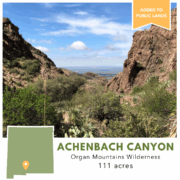
In 2021 The Wilderness Land Trust purchased 111 acres of private property adjoining the wilderness area at the mouth of Achenbach Canyon. The project protects public access to the popular 5.5-mile trail that follows the canyon up the flanks of the peaks above, connecting it to the Sierra Vista Trailhead. Working with our partners at the Bureau of Land Management, we recently completed the transfer of the property to public ownership through the Land and Water Conservation Fund (LWCF).
LWCF uses revenue from offshore oil and gas leases to fund conservation and recreation projects across the country, from acquiring properties in and around wilderness areas, like the Achenbach Canyon project, to building parks and playgrounds.
Senator Heinrich (NM), who visited the Achenbach Canyon property with the Trust and our partners after it was acquired in 2021, celebrates the project for improving public access: “Five years ago, we passed the Great American Outdoors Act and permanently funded the LWCF. Today, we’re seeing the results: the Achenbach Canyon property is now public land—thanks to LWCF Recreation Access funds. Improving access to OUR public lands is exactly why we fought for it. I’m grateful to the Wilderness Land Trust and Friends of Organ Mountains-Desert Peaks for their partnership and hard work in expanding New Mexicans’ access to public lands with this win.”
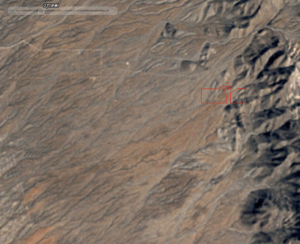
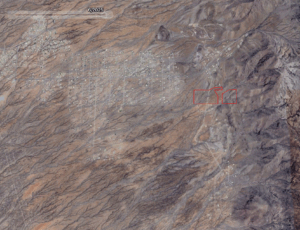
Satellite images from February 1996 and June 2025 showing development surrounding the Achenbach Canyon project (outlined in red). Images from Google Earth.
Over the last 30 years Las Cruces has doubled in population, and the area surrounding the Achenbach Canyon project has infilled with residential development. Protecting the property as public lands will ensure that public access is preserved and corridors of connected habitat are maintained for wildlife migration between the wilderness area and national monument.
Friends of Organ Mountains-Desert Peaks was an invaluable partner in making the Achenbach Canyon project a success: “Friends of Organ Mountains-Desert Peaks are elated to hear that Achenbach Canyon will now be in public hands. Access to this stunning area of Organ Mountains-Desert Peaks National Monument has been a top priority for the organization. We wish to thank the Wilderness Land Trust and the BLM Las Cruces office for their commitment to this project and hard work to get this done. This project is a great example as to why the Land and Water Conservation Fund is such a vital tool for communities working to promote access to public lands. Achenbach is a jewel of Organ Mountains-Desert Peaks and this will ensure access for generations to come” says Patrick Nolan, Executive Director.
Representative Vasquez (NM) voices his support of the project, emphasizing the role of the local community: “This acquisition of the Achenbach Canyon Trail in Las Cruces is a significant win for all of us who cherish the Organ Mountains and the beautiful landscape that is right in our backyard. The transfer of this 111 acres opens up public access to one of the best recreation opportunities in our national monument. This was driven by the local community and groups like the Friends of the Organ Mountains Desert Peaks, and it is exactly the kind of progress I’ve been advocating for as a leader of the bipartisan Public Lands Caucus in Congress.”
Senator Luján (NM) also praises the project for benefiting local outdoor recreation and the tourism economy: “In the face of today’s unprecedented attacks on our public lands, it’s great to see public access to Achenbach Canyon protected. Ensuring that our growing Las Cruces community has access to this special place is a win-win for outdoor recreation and our tourism economy. Thank you to The Wilderness Land Trust, the Friends of Organ Mountains-Desert Peaks, and all who have supported the Land and Water Conservation Fund to make public protections like these a reality.”
Achenbach Canyon is the 26th property protected by The Wilderness Land Trust in New Mexico, totaling 4,900 acres. The Trust also acquired another 98-acre property located north of Achenbach Canyon in 2020, which we are still working to transfer to public ownership.