Wilderness Land Trust
  • ABOUT
    • Our Mission
    • Our Story
    • Our Staff
    • Our Board
    • Join Our Team
    • Newsletters
    • Annual Reports & Financials
  • HOW WE WORK
    • Our Process
    • Stories
    • Landowners
    • Videos
    • Wilderness Book Club
  • NEWS
    • Recent News
    • Press
  • PROJECTS
    • Projects by State
  • GET INVOLVED
    • Donate
    • Ways to Give
    • Support a Project
  • CONTACT US
  • Donate Now
  • Click to open the search input field Click to open the search input field Search
  • Menu Menu

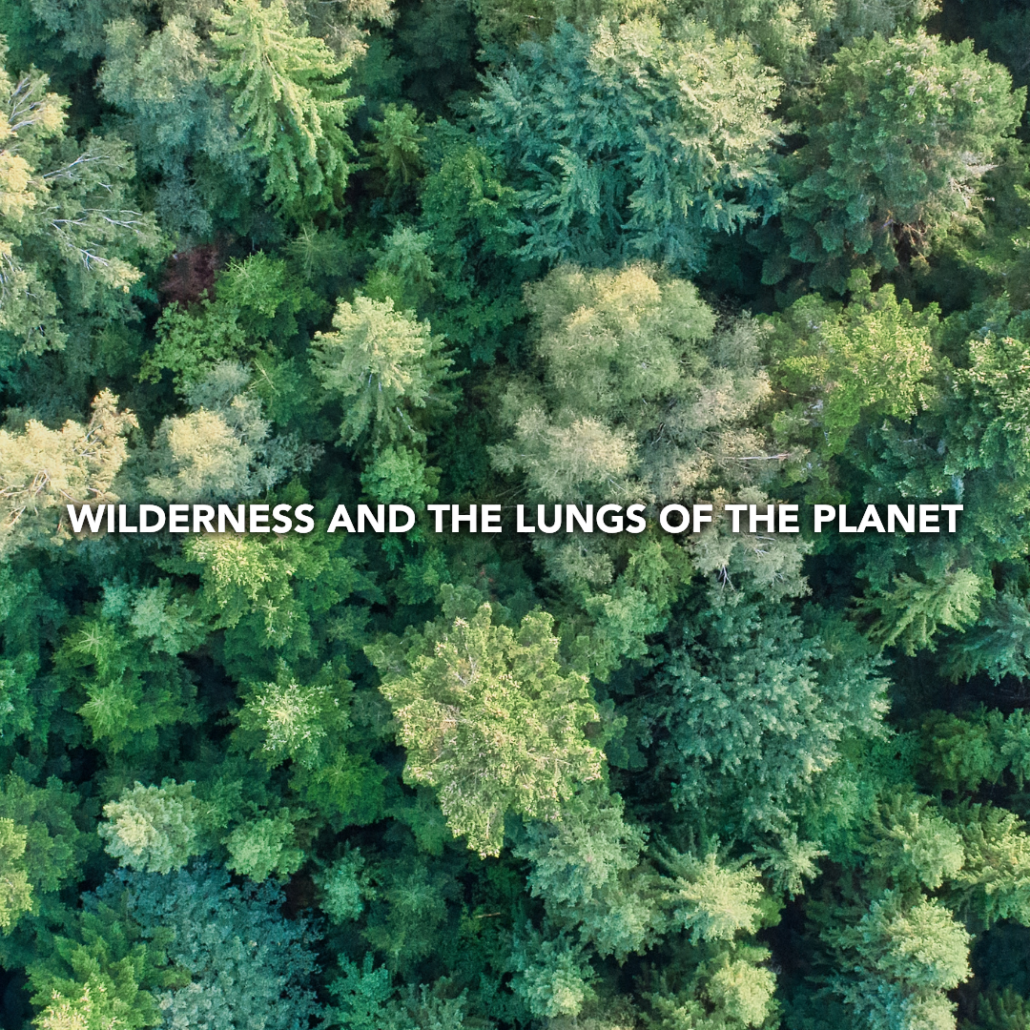
Wilderness and the lungs of the planet

July 26, 2024-

Increasingly, summer in the West has become synonymous with wildfire season. As of this week, 89 large wildfires are active in the US and have burned 1,611,409 acres. But the impacts of those fires reach far beyond the communities directly affected by them, as smoke blankets much of the country, reaching through the Midwest and New England and well into the Atlantic Ocean. With it comes impacts ranging from reduced visibility to unhealthy air quality.

Map showing the extent of current wildfire smoke from fire.airnow.gov

It’s hard to say whether to call it irony or a perfect example of the balance and interconnectedness of the natural world that the same forests that cyclically burn also help to purify the air of smoke caused by those fires. Forests are often called the lungs of the world for how they help to remove pollutants from the air, ranging beyond smoke to carbon dioxide, sulfur dioxide, and particulate matter. Our nation’s forests offset around 13% of our greenhouse gas emissions every year. Of course, these benefits are provided beyond the boundaries of wilderness areas: roughly 30% of the US is forested, but only 4.5% is wilderness. Urban trees and forests can be particularly impactful as well, as a single tree can absorb 10 pounds of pollutants and 48 pounds of carbon dioxide each year. Interestingly, some trees are more efficient at removing pollutants from the air: the needles of coniferous trees can continually absorb pollutants for several years, while the broader leaves of deciduous trees have more surface area for particulate matter to attach to. “The various species differed more than we expected. Larch, which is a conifer that sheds its needles each autumn, was best in test. Larch trees absorbed the most particle-bound pollutants, but were also good at capturing gaseous PAHs,” found one study.

Clean air is one of the many benefits that wilderness provides, but it is also one of the requirements of protection of wilderness. While the Wilderness Act does not call out clean air as one of the characteristics of wilderness to be preserved in its natural state, the Clean Air Act does categorize wilderness areas larger than 5,000 acres that were established prior to 1977 (totaling 139 of 806 designated wilderness areas) as the highest level of mandated protection against air pollution (with all other wilderness areas are categorized as the second highest level of protection). Development of private lands in and around wilderness areas can be a major source of local air pollution emissions. By limiting this development we are not only aiding in the protection of wilderness character, we are protecting the forest ecosystems which remove pollution from the air.

More broadly, protecting large connected ecosystems in their natural state allows these natural processes and cycles, which are nothing short of miraculous in their efficiency and ingenuity, to go on unimpeded. While technology can offer additional options for removing pollutants from the air, which will likely be increasingly needed to mitigate the climate crisis, you don’t have to look farther than out your window, at the nearest tree, for the original technology of the lungs of the planet.


Get more wilderness news delivered to your inbox!

Select list(s) to subscribe to


By submitting this form, you are consenting to receive marketing emails from: The Wilderness Land Trust, PO Box 881, Helena, MT, 59624, https://www.wildernesslandtrust.org. You can revoke your consent to receive emails at any time by using the SafeUnsubscribe® link, found at the bottom of every email. Emails are serviced by Constant Contact
Share this entry
  • Share on Facebook
  • Share on X
  • Share by Mail
https://wildernesslandtrust.org/wp-content/uploads/2024/07/banner-1080-x-1080-px.png 1080 1080 Margosia Jadkowski https://wildernesslandtrust.org/wp-content/uploads/2024/12/wilderness-land-trust-logo-2024.png Margosia Jadkowski2024-07-26 13:00:352024-07-26 13:00:35Wilderness and the lungs of the planet
You might also like
Colorado Land Protected for Future Wilderness
Sally Bowman Joins the Weminuche Wilderness
We’re Applying for Land Trust Accreditation Renewal
Snowy Little Castle Lake Protecting Access to Castle Crags Wilderness
Santa Lucia Flower California Condor Trail Access is Permanently Protected
Readying a Property for Transfer
Looking east from the Grandview Lode property The Romance of Heart Lake
Saying Goodbye to a Conservation Leader

Join Us

Get more wilderness news delivered to your inbox!

Select list(s) to subscribe to


By submitting this form, you are consenting to receive marketing emails from: The Wilderness Land Trust, PO Box 881, Helena, MT, 59624, https://www.wildernesslandtrust.org. You can revoke your consent to receive emails at any time by using the SafeUnsubscribe® link, found at the bottom of every email. Emails are serviced by Constant Contact

Recent News

  • What we can learn from the Roadless Rule public comments
  • Catching up with an old friend: Old Woman Mountains Wilderness
  • Protecting a haven for endangered wildlife in Southern California
  • One step closer to wilderness for Snowmass Falls Ranch
  • What the Roadless Rule means for wilderness
61 acres, permanently protected. The Great Western 61 acres, permanently protected. The Great Western Lode and Needle Creek properties have been added to the Weminuche Wilderness, ensuring they’ll stay wild forever. When you give where you live through Colorado Gives day, your support fuels this work. Donate now through December 8th.
7,373 acres protected across Colorado and counting 7,373 acres protected across Colorado and counting! Give where you live, and help us continue to protect the wilderness you love this Colorado Gives Day. Early giving is now open through the link in our bio!
Over 1 million people participated in the public c Over 1 million people participated in the public comment period for the proposed rescission of the Roadless Area Conservation Rule, with 390,000 submissions and 81,000 unique comments.
 
We can learn a lot from them. We know that 97% of them opposed rescinding the Roadless Rule, and that the top topics mentioned in them were environmental protection and biodiversity; recreation, tourism, and public use; water quality and quantity; wildlife habitat; and forest management and wildfire.
 
But what was most striking when reading through comments was what the arguments were built on. They speak about experiences in these places, shared across generations, and the impact they have had on people from all walks of life. They reflect heritage and traditions passed down through families and cultures. They hold a remarkable amount of hope and continued trust in a shared vision for the future of our planet. They value the common good over the profit of the few. They speak up for all life, not just human life. They trust in science. They revere beauty and something greater than ourselves. 
 
We can also learn a great deal from comments in favor of opening up roadless areas. While some represent industry interests, many come from people with a deep connection to these lands. Some share the experiences of people with disabilities who are limited in how they can access public lands. Some point to communities, many of them Native, who rely on these lands for subsistence uses and rural economies. Others reflect the fears of communities increasingly impacted by wildfires. All of these voices should be welcomed and represented in decision-making for our public lands.
 
While it’s yet to be seen how these comments will be reflected in the fate of the Roadless Rule, they’ve provided an important opportunity for us to take a moment to listen to our neighbors and better understand our community.
We need your help to protect Robinson Creek! In We need your help to protect Robinson Creek!
 
In California’s Eastern Sierra, the Hoover Wilderness is a spectacular and rugged landscape of alpine lakes, blooming meadows, and granite spires and domes. The Robinson Creek property sits in its heart, overlooking to popular Robinson Creek Tail which leads hunters, anglers, and sportsmen in to the wilderness and neighboring Yosemite National Park. 
 
Your generous contribution will help us raise the remaining $21,750 needed to complete the project and protect the Robinson Creek property as wilderness. 

Donate today through the link in our bio.
With the Agua Blanca property now safeguarded from With the Agua Blanca property now safeguarded from development, we’re helping to protect watersheds and connected habitat for wildlife, and ensure future generations have the opportunity to experience wilderness solitude and inspiration.
A black bear joined Trust supporters in the Roarin A black bear joined Trust supporters in the Roaring Fork Valley of Colorado yesterday to hear about our work protecting local wilderness areas.
Follow on Instagram

Find us on Facebook!

X Logo X Logo Followon X
  • About
  • How We Work
  • News
  • Get Involved

THE WILDERNESS LAND TRUST
PO BOX 881
HELENA, MT 59624

PHONE: 206.397.5240

EIN 84-1192823

Stay Connected

Select list(s) to subscribe to


By submitting this form, you are consenting to receive marketing emails from: The Wilderness Land Trust, PO Box 881, Helena, MT, 59624, https://www.wildernesslandtrust.org. You can revoke your consent to receive emails at any time by using the SafeUnsubscribe® link, found at the bottom of every email. Emails are serviced by Constant Contact
© Copyright Wilderness Land Trust 2018
  • Terms of Use
  • Privacy Policy
Link to: Mapping threats to the wilderness you love Link to: Mapping threats to the wilderness you love Mapping threats to the wilderness you love Link to: Come along to the recently protected Spring Canyon project Link to: Come along to the recently protected Spring Canyon project Come along to the recently protected Spring Canyon project
Scroll to top Scroll to top Scroll to top
Give Now

Donate